If you have ever visited Turkey, you have probably noticed blue glass eye-shaped amulets everywhere. They hang in homes, shops, cars, and even on newborn babies. This iconic symbol is the nazar boncuğu, also known as the Turkish evil eye bead. It is one of the most recognizable elements of Turkish culture.
In this article, you will learn what nazar means in Turkish, where the tradition comes from, how the beads are made, and which expressions Turks use related to it. Whether you are learning Turkish or planning a trip to Turkey, this guide will help you understand a deeply rooted cultural practice.
Table of Contents
What Does “Nazar” Mean in Turkish?
The word nazar comes from Arabic and means “look” or “gaze.” In Turkish culture, it refers to a harmful energy caused by envy or excessive admiration. When someone receives too much praise or attention, Turks believe this can attract negative energy. This negative force is called nazar.
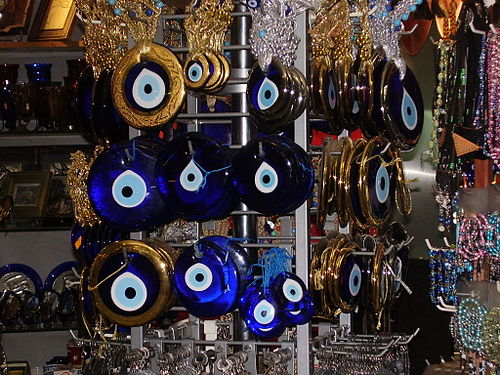
The full name of the protective amulet is nazar boncuğu. The word boncuk means “bead” in Turkish. Together, nazar boncuğu translates to “evil eye bead.” This glass charm acts as a decoy. It attracts the harmful gaze and absorbs the negative energy, protecting its owner from misfortune.
Turks take this belief seriously. When a nazar boncuğu cracks or breaks, many people see it as proof that the amulet has done its job. It absorbed a strong wave of negativity and protected its owner. After it breaks, they replace it with a new one immediately.
Order that çay in Turkish
Become fluent in Turkish with real-life dialogues & interactive exercises tailored for expats living in Türkiye.
The History and Origins of the Nazar
The belief in the evil eye is ancient. Archaeologists discovered the earliest eye-shaped amulets at Tell Brak, in modern-day Syria. These carved gypsum alabaster eyes date back to approximately 3,300 BCE. The concept spread across the Mediterranean, Mesopotamia, and Central Asia over centuries.
By around 1,500 BCE, artisans started crafting blue glass versions of the amulet. The shift from carved stone to glass marked an important evolution in the tradition. Ancient Greeks and Romans also believed in the evil eye. They used similar protective charms in their daily lives.
In Turkey, the tradition became especially popular during the Ottoman Empire. Skilled glassmakers in the Izmir region began producing nazar boncuğu by hand. The deep blue color of the beads comes from cobalt, which artisans believed held strong protective power. Villages like Görece and Nazarköy (near Izmir) became centers of this craft. Today, a few master glassblowers still carry on these age-old techniques.
How Is a Nazar Boncugu Made?
Traditional nazar boncuğu beads are handmade using blown glass. The process requires skill and precision. Artisans use a mixture of molten glass, iron, copper, water, and salt. Each ingredient is thought to contribute to the protective power of the bead.
The glassblower shapes the molten material into a circle or teardrop. Then, they add concentric circles of color: dark blue on the outside, followed by white, light blue, and black at the center. This pattern creates the distinctive “eye” shape. Some designs also include a yellow or gold edge.
The best nazar beads come from workshops in Anatolia, particularly around Izmir. Visitors can watch artisans blow and shape the glass in real time. It is a fascinating experience and a great way to connect with Turkish craftsmanship.
Where Do Turks Place the Nazar Boncugu?
The nazar boncuğu appears almost everywhere in Turkey. Turks place it in specific locations to protect people, homes, and possessions from the evil eye. Here are the most common uses:
- Newborn babies: Parents pin a small nazar boncuğu onto their baby’s clothing or blanket right after birth. This protects the child from admiring gazes that could bring harm.
- Homes and buildings: Many Turkish households hang a nazar boncuğu near the front door or on a wall. It guards the home against envious visitors.
- Cars and vehicles: Drivers often hang a nazar boncuğu from their rearview mirror. It serves as protection during travel.
- Shops and businesses: Store owners display the evil eye bead to ward off jealousy from competitors or customers.
- Jewelry and accessories: Many Turks wear the nazar as a bracelet, necklace, or keychain. It combines fashion with tradition.
You will also find the nazar symbol on textiles, ceramics, and decorative items throughout Turkey. It is both a cultural symbol and a popular souvenir for visitors.
Turkish Expressions Related to the Evil Eye
Turkish has several expressions linked to the concept of nazar. Understanding these phrases will help you navigate social situations in Turkey. Moreover, using them shows cultural awareness and respect.
Nazar değmesin
This is the most common phrase related to the evil eye. Nazar değmesin means “may the evil eye not touch.” Turks say it after giving a compliment to protect the person or thing they praised. For example:
- Bebeğiniz çok tatlı, nazar değmesin! (Your baby is so cute, may the evil eye not touch them!)
- İşlerin harika gidiyor, nazar değmesin! (Your work is going great, may the evil eye not touch it!)
Nazar değdi
Nazar değdi means “the evil eye has touched.” Turks use this expression when something goes wrong unexpectedly, especially after a period of good fortune. The verb değmek means “to touch” or “to affect.” Therefore, nazar değdi implies that envy or negative energy has caused the misfortune.
- Araba bozuldu, nazar değdi herhalde. (The car broke down, the evil eye must have touched it.)
Maşallah
Maşallah (from Arabic, meaning “God has willed it”) is used when giving a compliment. By saying maşallah, the speaker credits God for the good thing they admire. This helps neutralize any potential jealousy. Turks use it frequently when praising babies, homes, achievements, or appearances.
- Maşallah, çok büyümüş! (God has willed it, they have grown so much!)
- Maşallah, ne güzel bir ev! (God has willed it, what a beautiful house!)
Allah korusun
Allah korusun means “may God protect.” Turks use this phrase to ask for divine protection against harm or misfortune. You will often see it written on signs, bumper stickers, and building entrances. It reflects the deep connection between religious beliefs and daily life in Turkey.
The Nazar Boncugu and the Hamsa
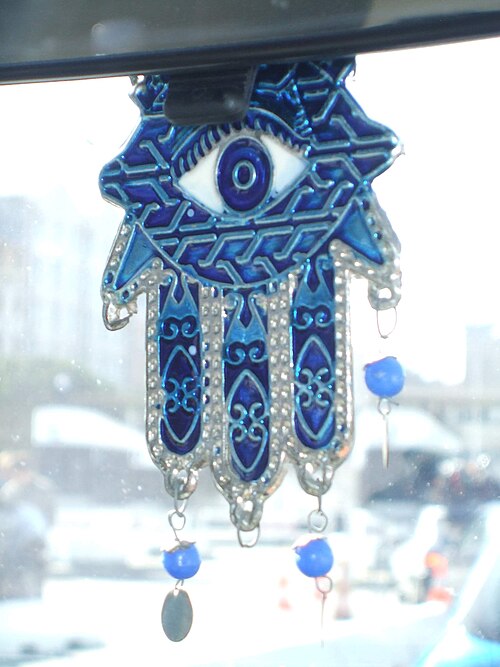
The nazar boncuğu is often paired with another protective symbol: the hamsa (also called the Hand of Fatima). The hamsa is a hand-shaped amulet with an eye in the center. It appears in many Middle Eastern and North African cultures.
In Turkey, you will find nazar beads combined with hamsa designs on jewelry, wall decorations, and keychains. Both symbols serve the same purpose: deflecting negative energy and protecting against envy. Together, they create a powerful visual shield. Red ribbons are also sometimes tied alongside the nazar boncuğu for additional protection.
Nazar Vocabulary Table
| Turkish | English |
|---|---|
| Nazar | Evil eye / harmful gaze |
| Nazar boncuğu | Evil eye bead |
| Nazar değmek | To be affected by the evil eye |
| Nazar değmesin | May the evil eye not touch |
| Nazar değdi | The evil eye has touched |
| Maşallah | God has willed it |
| Allah korusun | May God protect |
| Boncuk | Bead |
| Muska | Amulet / talisman |
| Kem göz | Evil eye (literary) |
Conclusion
The nazar boncuğu is much more than a decorative souvenir. It represents a centuries-old belief deeply woven into Turkish daily life. From newborn babies to business entrances, this blue glass eye guards against envy and negative energy. Understanding the concept of nazar and the expressions linked to it will enrich your Turkish vocabulary and cultural knowledge.
Next time someone compliments you in Turkey, listen for the words “maşallah” or “nazar değmesin.” These phrases reflect genuine kindness and a desire to protect what is cherished.
To continue learning about Turkish culture, discover the meaning of “Hayırlı olsun” in Turkish or explore Islamic and religious vocabulary in Turkish.