Turkey welcomes millions of expats, students, and travelers every year, and most of them reach for an app before anything else. The app stores are crowded, though, and Turkish support ranges from genuinely good to almost an afterthought. Many popular apps built their reputation on Spanish or French, then bolted Turkish on later with far less depth.
In this article, you will learn which apps actually teach Turkish well, how they compare on grammar depth and price, and which one fits your goals. You will also see the honest weaknesses of each, because Turkish is a hard language to fake your way through. If you are still weighing your options, our guide on why you should learn Turkish is a good place to start. Haydi başlayalım!
Table of Contents
Overview: Turkish Learning Apps Compared
| App | Best for | Grammar depth | Price model |
|---|---|---|---|
| TurkishFluent | Expats wanting structured Turkish | Strong | Free A1, then subscription |
| Duolingo | Building a daily habit | Light | Free, optional subscription |
| Babbel | Guided beginner lessons | Medium | Subscription |
| Pimsleur | Listening and speaking | None (audio only) | Subscription |
| Ling | Gamified practice, rarer languages | Light to medium | Subscription |
| Rosetta Stone | Immersion without translation | Low (no rules) | Subscription |
| Mondly | Quick vocabulary drills | Light | Subscription |
| Busuu | Feedback from native speakers | Medium | Free tier, subscription |
| Glossika | Sentence repetition, listening | Low | Subscription, small free tier |
| italki | One-on-one tutoring | Depends on tutor | Pay per lesson |
Prices change often and vary by country, so treat the models above as a guide rather than a quote. Now let us look at each app on its own terms.
Order that çay in Turkish
Become fluent in Turkish with real-life dialogues & interactive exercises tailored for expats living in Türkiye.
TurkishFluent: Built for Turkish, Not Bolted On
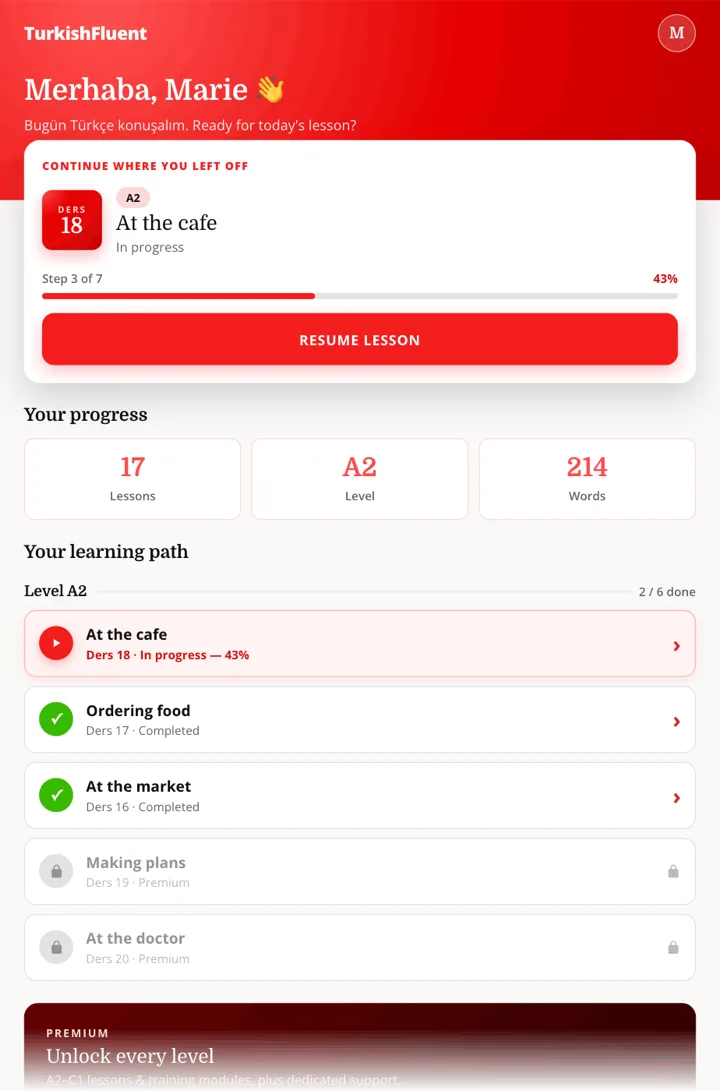
I should be transparent here: I’m the founder of TurkishFluent, so treat this section as an insider’s honest view rather than a neutral one. The app exists because most tools on this list teach Turkish as a side language. TurkishFluent teaches only Turkish, and it was made for expats actually living in Turkey.
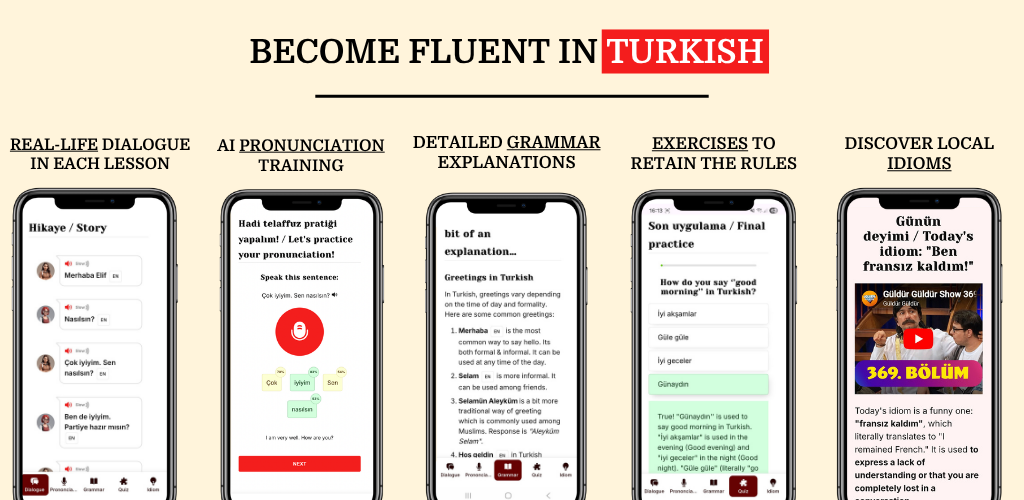
The grammar track is its core strength. A professional Turkish teacher in Istanbul, Sibel Kısacık, designed the whole progression, and it shows in how carefully each concept builds on the last. Instead of guessing rules the Duolingo way, you get clear explanations of cases, suffixes, and word order in the right order. The dialogues are recorded by native speakers at both normal and slowed speed, so you can train your ear without giving up. There is also AI pronunciation feedback, where you speak and the app tells you how close you got.
When I opened the free A1 track, I started with the greetings lesson, moved into plurals, and then hit the locative case within the first handful of lessons. Each lesson took about ten minutes and mixed a dialogue, a short grammar note, and quick exercises. By the end of the first block, I could form simple sentences about where things are, which is exactly what you need to order that çay in Turkish.
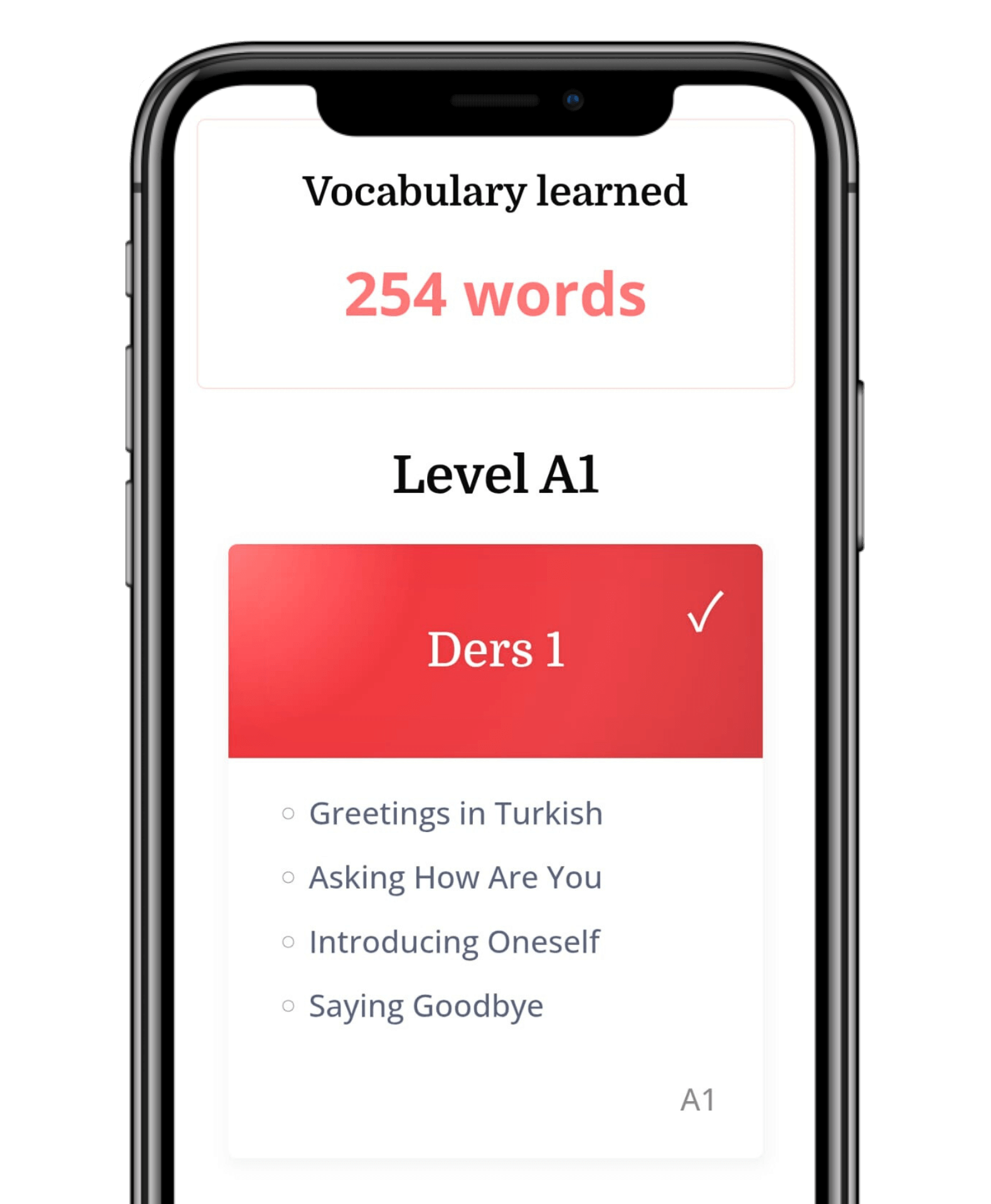
Here is the honest part. TurkishFluent is newer than Duolingo, so its community and streak features are smaller. It also serves a specific audience, expats who want structure, and it will feel too serious for someone who just wants a casual game. The genuine hook is the price: the entire A1 level (16 lessons) is free forever, covering greetings, plurals, and the grammatical cases. Paid plans only start at A2, with a monthly option, a cheaper annual plan, a seven-day trial, and a thirty-day money-back guarantee. You can try the whole foundation before spending anything.
- Best for: expats and serious beginners who want real grammar structure.
- Watch out for: a newer app with a niche focus and lighter gamification.
Duolingo: Best Free App for Building a Habit
Duolingo is the app almost everyone tries first, and for good reason. It is free, friendly, and genuinely addictive. The Turkish course introduces basic vocabulary and sentence patterns in bite-sized lessons that fit into a coffee break.
However, the gamified format has real limits for Turkish. The app rarely explains grammar directly, so you absorb rules by trial and error rather than understanding. That approach works for simple sentences. Turkish grammar, though, leans heavily on suffixes and vowel harmony, and guessing your way through those is slow and frustrating.
The Turkish tree is also shorter than the flagship courses, and it fades out around the upper beginner level. As a result, Duolingo is excellent for testing the waters and staying consistent. Just do not expect it to carry you to real conversations on its own.
- Best for: absolute beginners who want a free, low-commitment start.
- Watch out for: thin grammar explanations and a course that stops early.
Babbel: Clear Lessons for Structured Beginners
Babbel is often described as the grown-up alternative to Duolingo, and the label fits. Its lessons are built by in-house linguists, and they explain grammar far more clearly than a pure game does. For learners who want structure without a textbook, Babbel feels reassuring.
That said, Turkish is not one of Babbel’s flagship languages. The course exists and teaches solid foundations, yet it lacks the depth and polish of its Spanish or German tracks. You get clear dialogues, spelling practice, and grammar tips, but the content runs out sooner than you might hope.
Babbel uses a subscription model, with cheaper rates on longer plans. For a beginner who values clear explanations over gamification, it is a reasonable pick. Nevertheless, expect to outgrow it once you push past the basics.
- Best for: beginners who want guided, structured lessons.
- Watch out for: a Turkish course that is thinner than Babbel’s headline languages.
Pimsleur: Best for Listening and Speaking
Pimsleur takes a completely different approach. It is audio only, built around spaced repetition and speaking out loud. You listen to a short dialogue, then the app prompts you to recall and produce phrases from memory. For pronunciation and listening confidence, this method genuinely works.
Because Turkish sounds are mostly regular, the audio-first format suits it well. You train your ear and your mouth at the same time, which many screen-based apps neglect. Consequently, learners who finish a Pimsleur level often speak more naturally than those who only tap answers.
The trade-offs are clear, though. Pimsleur offers no written grammar explanations and no reading practice. Some scenarios also feel dated. Treat it as a strong speaking supplement rather than a complete course, and pair it with something that teaches you to read and write.
- Best for: commuters who want to speak and understand spoken Turkish.
- Watch out for: no grammar, no reading, and a higher price point.
Ling: Gamified Practice Across Skills
Ling has grown popular for exactly the languages bigger apps neglect, and Turkish is one of them. It blends flashcards, listening, speaking, and writing exercises with a chatbot for light conversation practice. The gamified design keeps you coming back, much like Duolingo does.
Compared to Duolingo, Ling offers a bit more grammar and a wider set of exercise types. The native-speaker audio is clear, and the speaking drills give you useful repetition. For a well-rounded daily practice tool, it holds up nicely.
Still, Ling shares the common weakness of gamified apps. Its grammar notes stay brief, and the app cannot replace a proper explanation of how Turkish cases and suffixes work. It uses a subscription model with discounts on annual and lifetime plans. Overall, Ling is a solid all-in-one practice app, though not a deep grammar course.
- Best for: learners who want varied, gamified practice.
- Watch out for: grammar that stays surface level.
Rosetta Stone: Immersion Without Translation
Rosetta Stone built its name on full immersion. It shows you images paired with Turkish words and sentences, then asks you to infer meaning without any translation. For some learners, this intuitive approach clicks and builds strong instincts.
The method has clear strengths. You start thinking in Turkish sooner, and you avoid leaning on English as a crutch. Since it switched to a subscription model, the price is also far more reasonable than it once was.
However, the no-translation rule has a cost with a language like Turkish. Complex grammar simply cannot be inferred from pictures alone, so cases and verb forms stay fuzzy. The voice recognition also struggles with Turkish sounds at times. In short, Rosetta Stone rewards patience but leaves your grammar underdeveloped.
- Best for: patient learners who enjoy figuring things out intuitively.
- Watch out for: no explicit grammar and hit-or-miss speech recognition.
Mondly: Quick, Visual Vocabulary Drills
Mondly looks polished and feels smooth to use. Its Turkish course resembles Duolingo, with short lessons that drill vocabulary and common phrases through a clean, colorful interface. For quick daily practice, it is pleasant and easy.
The strength of Mondly lies in its design and its focus on practical phrases. You pick up useful expressions for travel and everyday situations without much friction. Beginners often enjoy the smooth progression through the early lessons.
On the other hand, the experience gets repetitive fast. The learning path is linear, the grammar coverage is light, and the app rarely explains why a sentence works. As a result, Mondly suits casual learners and travelers more than anyone chasing real fluency. It runs on a subscription, frequently discounted.
- Best for: travelers wanting handy phrases fast.
- Watch out for: repetition and shallow grammar.
Busuu: Feedback From Native Speakers
Busuu adds something most apps lack: a community of native speakers who correct your work. You complete writing and speaking exercises, then real Turkish speakers give you feedback. That human touch sets it apart from purely automated apps.
The core course is structured and covers beginner through intermediate levels. Placement tests and goal setting help you stay on track. Above all, the correction feature pushes you to actually produce Turkish rather than just recognize it, which matters enormously for progress.
Busuu does have gaps, though. Speaking practice inside the app is limited, and some review sections repeat too much. It offers a free tier alongside a paid subscription. For learners who want feedback without hiring a tutor, Busuu is one of the better balanced options on this list.
- Best for: learners who want native-speaker corrections.
- Watch out for: limited in-app speaking and repetitive reviews.
Glossika: Sentence Repetition for Fluency
Glossika is unusual and polarizing. It drops grammar lessons entirely and instead feeds you thousands of full sentences at natural speed, which you listen to and repeat. The idea is to absorb patterns the way you absorbed your first language.
For listening comprehension, this method is powerful. You internalize rhythm, word order, and common structures through sheer repetition. Learners who stick with it often report a sharp jump in how well they understand fast, natural Turkish.
The downsides are real, however. Glossika is not built for absolute beginners, since it never explains the rules behind the sentences. The repetition can also feel tedious over time. It uses a subscription with a small free tier. Think of Glossika as an advanced trainer, best added once you already grasp the basics.
- Best for: intermediate learners boosting listening and fluency.
- Watch out for: no grammar and a repetitive format.
italki: Real Tutors, Not an App Course
italki is not an app course at all, and that is the point. It connects you with Turkish tutors and conversation partners for one-on-one lessons over video. No app can replace speaking with a real person, and italki makes that affordable.
The platform itself provides no curriculum, so the quality of your experience depends on the tutor you choose. Its review system, however, tends to weed out weak teachers over time. You pay per lesson, and rates vary widely, which lets you match your budget.
Because it fills the one gap every app shares, italki works best as a complement. Use an app for grammar and vocabulary, then book a tutor to actually use what you learned. That combination beats any single tool for reaching real conversation. To see how long that road takes, read our guide on how long it takes to learn Turkish.
- Best for: speaking practice with real feedback.
- Watch out for: no set curriculum, so tutor choice matters.