The best book to learn Turkish depends on the job you need it to do. A coursebook introduces the language in sequence, a workbook gives you practice, and a reference grammar answers specific questions.
In this article, you will learn which books suit each stage, how to check their audio and learning support, and how to choose without buying several books that do the same thing. Haydi başlayalım!
Table of Contents
Which Turkish Book Should You Choose?
Start with one main course if you are new to Turkish. Add a workbook when you need more practice, or a reader when you can already follow short texts. A detailed grammar reference becomes useful when your questions outgrow beginner explanations.
The comparison below draws on publisher descriptions, contents lists, and official sample or audio resources checked in September 2026. The recommendations concern the books’ intended uses; they do not claim hands-on testing of every title.
| Book | Best use | Starting point | Audio or support to check |
|---|---|---|---|
| Complete Turkish | A main self-study course | Beginner | Official companion audio matched to the edition |
| Colloquial Turkish | A beginner course with listening | Beginner | Free downloadable course audio |
| Turkish Tutor | Extra grammar and writing practice | A2, according to the publisher | Exercises and learning guidance |
| Short Stories in Turkish for Beginners | Reading beyond isolated sentences | A2-B1, according to the publisher | Glossaries, summaries, and comprehension questions |
| Turkish: An Essential Grammar | Looking up everyday grammar | Learners with some foundations | Translated examples and reference tables |
| Turkish: A Comprehensive Grammar | Detailed grammatical questions | Advanced study and reference | Extensive analysis and a grammatical glossary |
If you are unsure what a beginner foundation includes, check the A1 Turkish learning roadmap before choosing a book.
Order that çay in Turkish
Become fluent in Turkish with real-life dialogues & interactive exercises tailored for expats living in Türkiye.
Complete Turkish: A Main Course for Independent Study
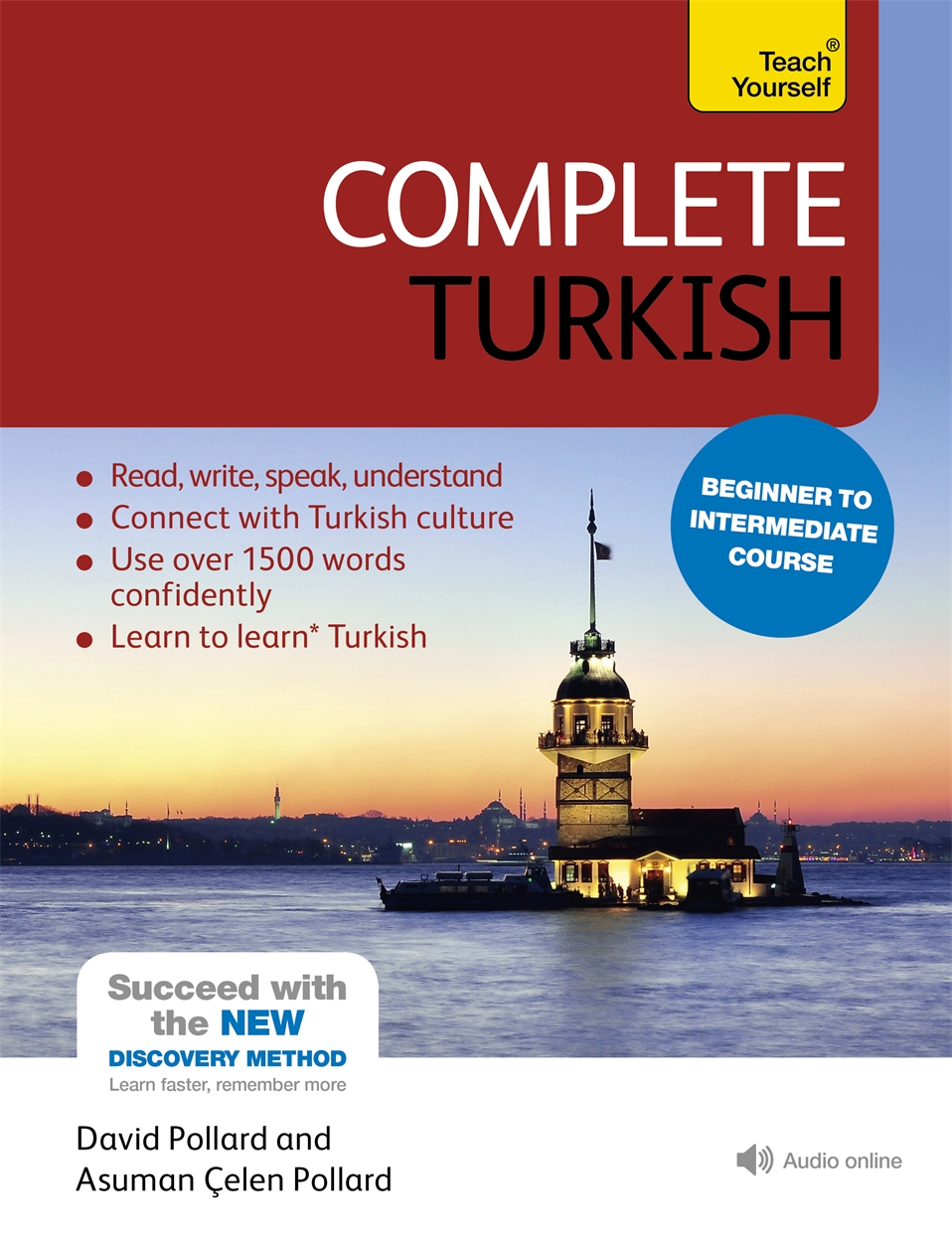
Complete Turkish, by David Pollard and Asuman Çelen Pollard, is a beginner-to-intermediate course from Teach Yourself. The publisher’s description presents a course that combines language learning with cultural information.
This is a sensible choice when you want one book to organise your study. Work through the units in order, listen to the accompanying material, and write your own versions of the sentences you meet. That sequence gives the book a clear role in your week.
Before buying a second-hand copy, compare its ISBN with the audio listing. Teach Yourself provides official audio for ISBN 9781444102390. An older edition is not automatically a match. Open a track before purchasing so you know how to access the material.
Colloquial Turkish: A Beginner Course with Downloadable Audio
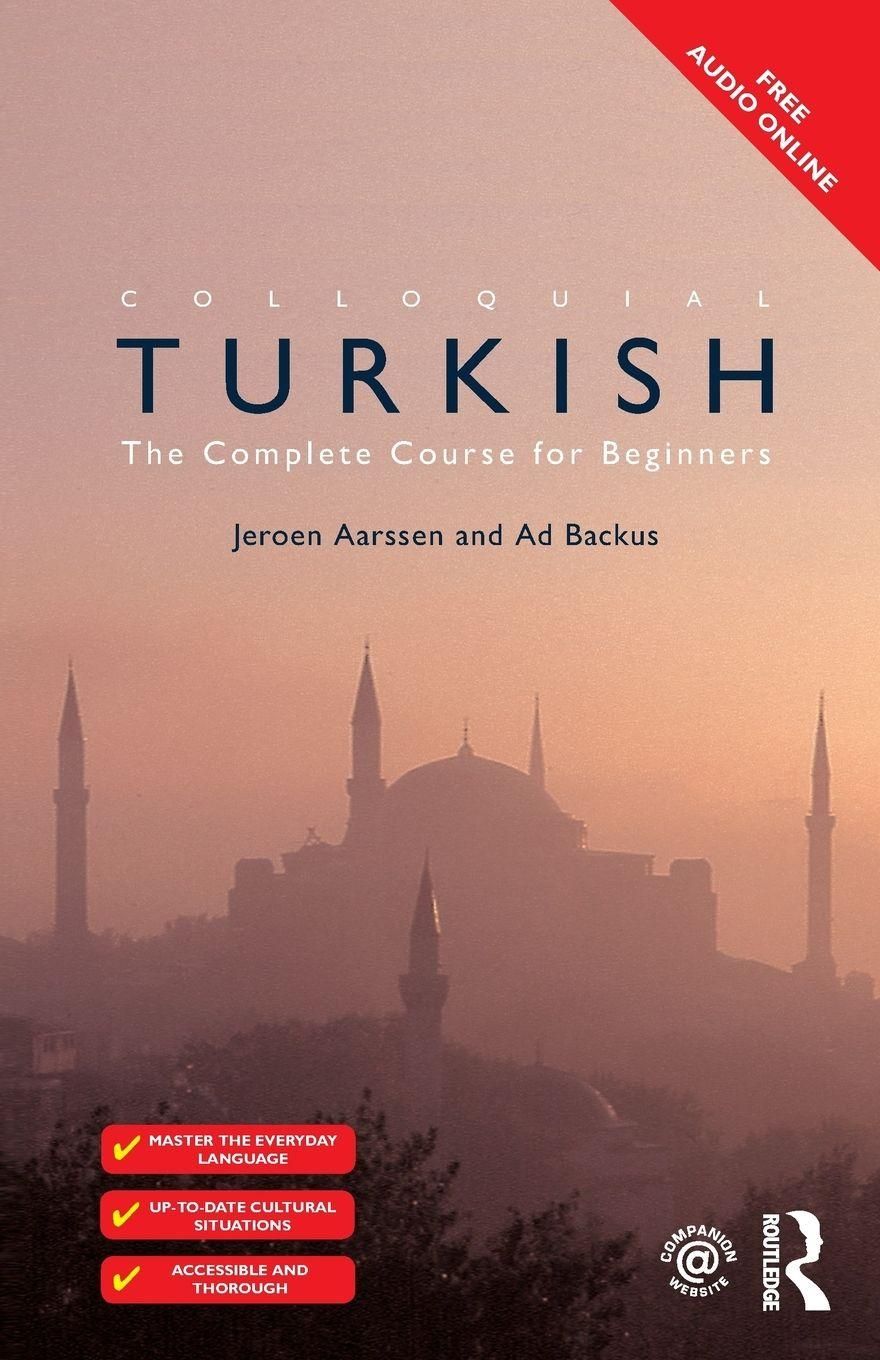
Colloquial Turkish: The Complete Course for Beginners, by Jeroen Aarssen and Ad Backus, offers another route into the language. Routledge supplies free downloadable MP3 audio for the course.
Choose between this and Complete Turkish by comparing a sample lesson. Look for explanations you understand, exercises you can complete independently, and dialogues you want to revisit. You do not need both as simultaneous main courses.
Give the audio a specific task. First listen for the situation, then follow the printed dialogue, and finally repeat a few lines without looking. Downloadable audio is particularly useful when you want to study away from your desk or without a steady connection.
Turkish Tutor: Focused Grammar and Vocabulary Practice
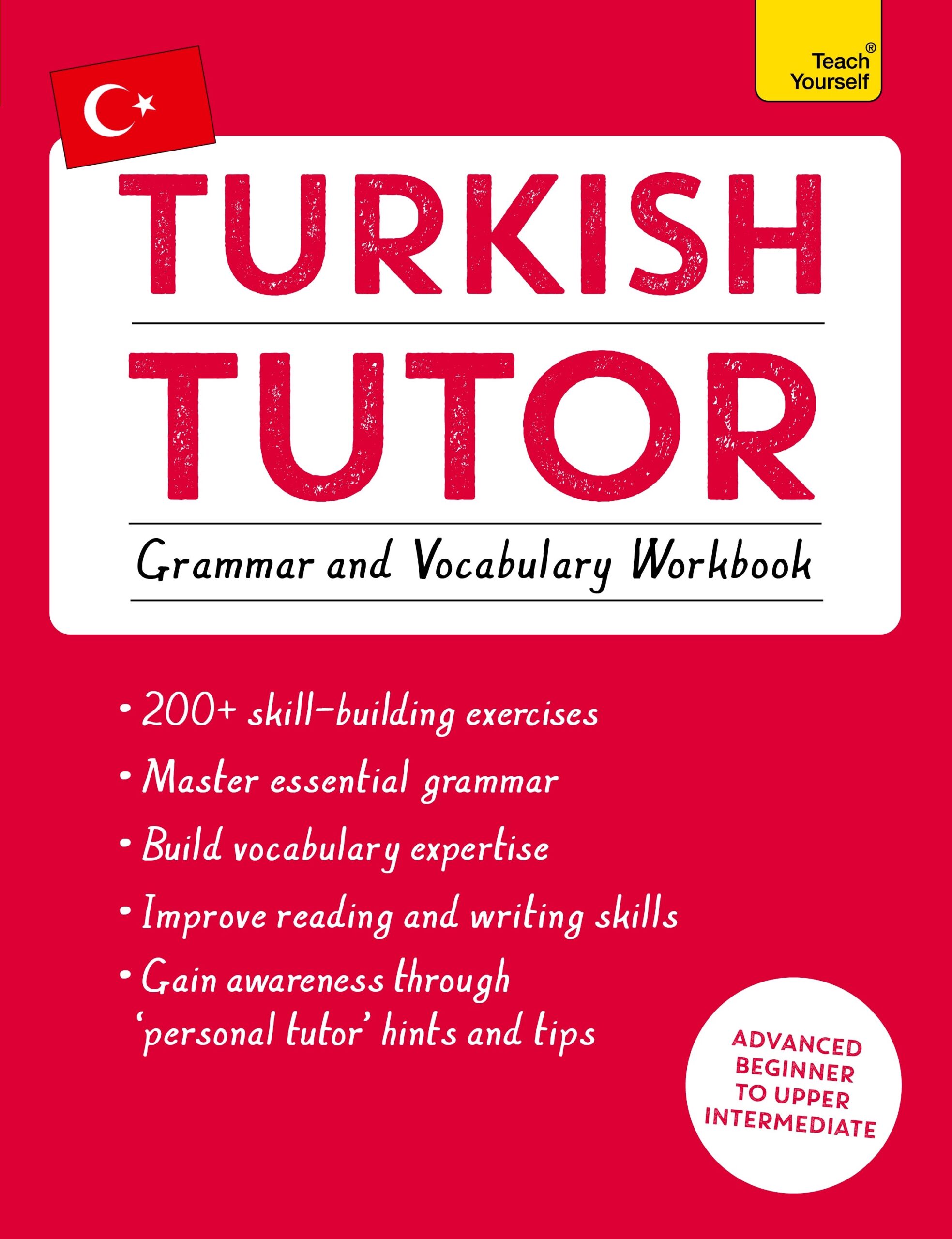
Turkish Tutor: Grammar and Vocabulary Workbook suits learners who understand explanations but need more practice using them. The publisher places it at A2-B2 and describes grammar, vocabulary, reading, and writing activities.
The important distinction is its starting level. Despite its broad title, this is not the clearest first purchase if you still need to learn the alphabet and form your first sentences. It becomes more useful once you can identify the grammar point you want to practise.
Use it alongside a main course or lessons. After studying a case ending, for example, complete relevant exercises and record the errors you make. Then write a new sentence using the same pattern. Treat it primarily as written practice rather than your main source of listening material.
Short Stories in Turkish for Beginners: Your First Graded Reader
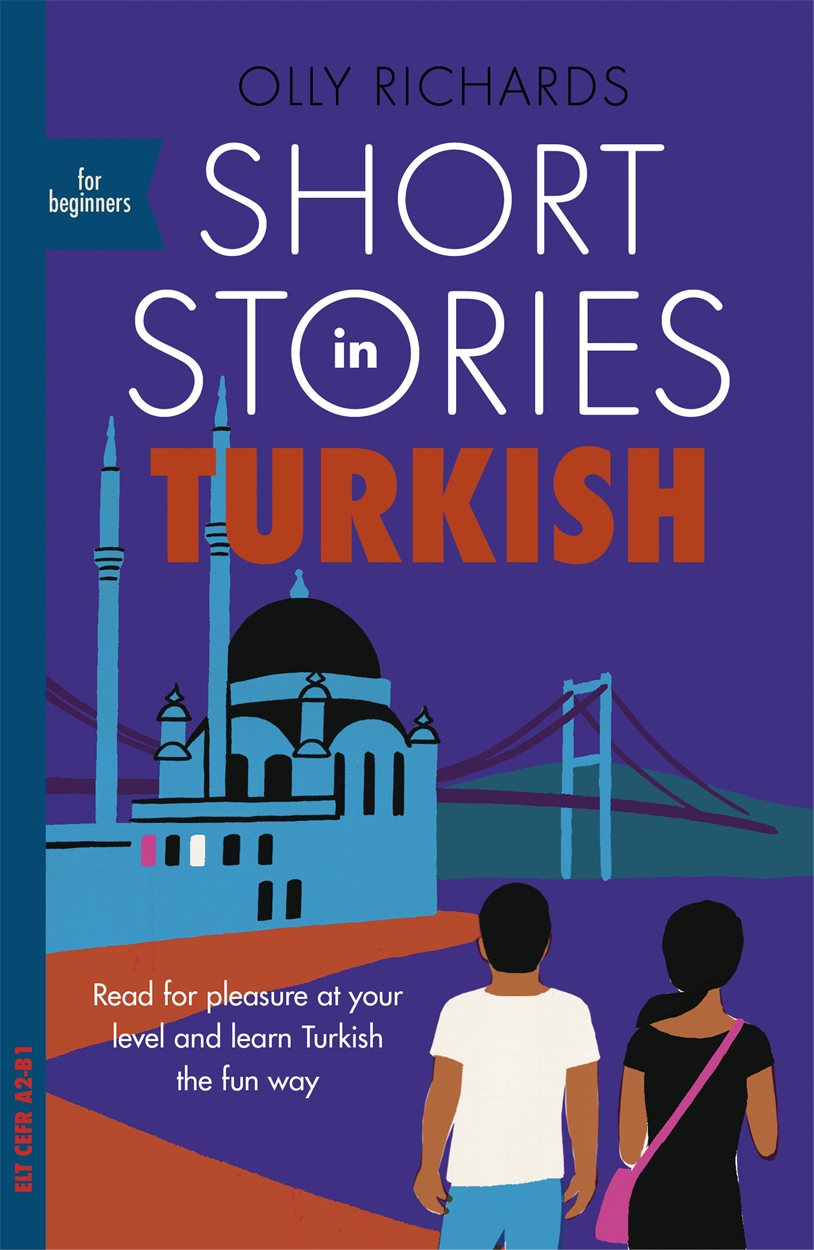
Short Stories in Turkish for Beginners, by Olly Richards, serves a different need: reading connected text. Hachette maps the book to A2-B1, so “for beginners” does not mean “for your first day of Turkish.”
The book includes vocabulary support, plot summaries, and comprehension questions. Choose it when you know basic sentence patterns but still need help following a story. It belongs beside a course, rather than replacing the course’s grammar sequence.
Read a short section for the overall meaning before checking every unfamiliar word. On a second pass, choose a few useful expressions to keep. If you want to listen as well, check the audiobook format separately; a paperback purchase does not by itself establish that audio is included.
Turkish: An Essential Grammar: A Reference to Keep Nearby
Turkish: An Essential Grammar, by Aslı Göksel and Celia Kerslake, is a reference work. Its contents and publisher description cover grammar through explanations, translated examples, tables, and a glossary of terms.
Choose it when you regularly ask questions such as “Why does this noun take that ending?” or “What is this sentence doing?” You can turn to the relevant section, resolve the question, and return to the text you were reading.
A reference book does not need to become a cover-to-cover assignment. Keep a note of the question you are trying to answer. For an initial map before consulting a detailed reference, use the overview of Turkish cases.
Turkish: A Comprehensive Grammar: For Deeper Questions
Turkish: A Comprehensive Grammar, also by Göksel and Kerslake, provides a more extensive reference. The second edition from Routledge addresses sound structure, word formation, and sentence structure in detail.
This is the strongest fit here for advanced learners who want to investigate complex usage. Its contents include noun clauses, relative clauses, word order, and discourse connections. Those subjects become more useful when you are reading longer texts and comparing alternative ways to express an idea.
It is a reference purchase, not a promise of an advanced level. You still need reading, listening, and conversation. Buy it when you have questions that justify the depth, rather than because a comprehensive book sounds like the fastest route through the language.
Conclusion
Choose Complete Turkish or Colloquial Turkish for a beginner course, Turkish Tutor for extra practice, and a graded reader for connected reading. Use the two Göksel and Kerslake grammars when you need reference explanations at different depths.
A useful book earns its place through the reading, listening, and practice you actually do with it.
To continue, discover how to build a practical Turkish learning routine.